 Skip to content
Porcelain Tile Thickness Guide | How to Choose Between 6mm, 9mm, and 20mm
Choosing the right floor is one of the most important decisions in any building or...
Read More...
Choosing the right floor is one of the most important decisions in any building or renovation project. It is not only about how the space looks, but also about its technical performance, durability, safety, and how well the surface aligns with the intended use. In this context, the thickness of porcelain tile is a key factor that is often underestimated, yet it can be decisive for the overall success of the project.
Porcelain tiles are among the most widely used materials in residential, commercial, and industrial settings, thanks to their versatility, strength, and wide range of finishes. However, not all porcelain tiles perform in the same way. Thickness directly affects mechanical resistance, installation methods, cost, and suitability for different environments.
When referring to porcelain tile thickness, we mean the total thickness of the tile, measured in millimetres from the back to the walking surface. This value influences several key aspects of performance.
It affects resistance to loads and impacts, the rigidity of the tile, and the overall weight per square metre. It also determines the type of subfloor required and the most suitable installation method.
In recent years, manufacturing innovation has made it possible to produce ultra-thin porcelain tiles without automatically compromising performance, while thicker options have evolved to meet more demanding applications such as outdoor spaces and high-load areas.
Why thickness matters in design
Thickness should never be chosen randomly. It must always be evaluated in relation to the project context.
The intended use of the space plays a major role, whether the tile is for indoor, outdoor, or drivable areas. Traffic levels are equally important, as light residential use differs significantly from heavy commercial or vehicular loads. The substrate also varies, from traditional screeds to existing floors, or systems such as sand, gravel, or raised supports.
Structural constraints must also be considered, especially in renovation projects where floor height, weight limits, and existing levels can restrict the available options.
Ignoring these factors can lead to cracking, detachment, or premature wear, ultimately compromising both performance and appearance.
6 mm porcelain tiles represent one of the thinnest options currently available and are widely used in modern interior design and renovation projects.
Their reduced weight makes them ideal where structural load needs to be minimised. They are often produced in large formats, allowing for a more seamless and continuous visual effect. Their dimensional precision also supports clean, contemporary aesthetics.
A strong example of this category is the Eternal collection, a marble effect porcelain tile available in 60×120 cm with a thickness of 6.5 mm. This type of tile is particularly suitable for creating elegant, continuous surfaces in bathrooms, kitchens, and living spaces, especially where a refined, high-end look is required without increasing floor build-up.
This thickness works particularly well in renovations where tiles are installed over existing flooring, as well as for internal floors and wall coverings in residential environments with light to moderate traffic.
The main advantages include reduced demolition costs, lower structural load, and suitability for large decorative slabs. However, they are less resistant to concentrated impacts and are not suitable for outdoor areas or high-traffic environments. Installation must be carried out by experienced professionals, as the substrate needs to be perfectly prepared.
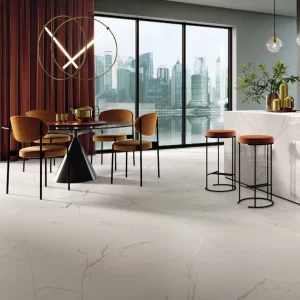
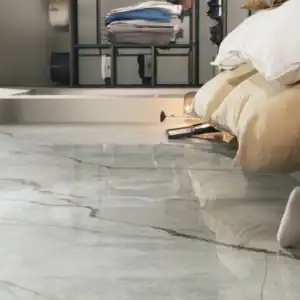
9 mm porcelain tiles are widely considered the standard choice for flooring. They offer an excellent balance between durability, versatility, and cost, making them the most commonly used thickness.
This option provides strong mechanical resistance and works well with most traditional substrates. It is also available in the widest range of formats and finishes, making it highly adaptable across different project types.
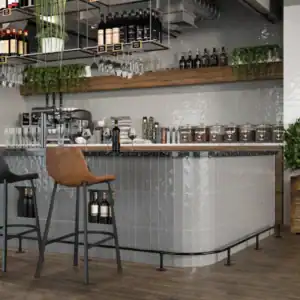
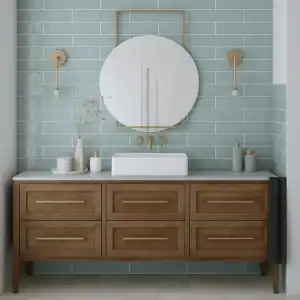
In your range, collections such as Oregon and Provence fall within this category. Oregon, with its 7.5×30 cm glossy metro format, is ideal for wall applications, while Provence, in 6.5×20 cm pastel glossy ceramic, offers a more classic decorative look. Alongside these, most stone, concrete, and marble-effect porcelain tiles in formats like 60×60 and 60×120 cm are typically produced in 9 mm thickness, making them suitable for both residential and commercial interiors.
9 mm tiles are suitable for residential interiors, offices, retail spaces, showrooms, and hospitality environments. They can also be used in certain covered outdoor areas when the correct technical specifications are selected.
One of their greatest strengths is their reliability. They offer a consistent balance between aesthetic appeal and long-term performance, while also being easier to install than thinner slabs. For many projects, this thickness represents the safest and most proven solution.
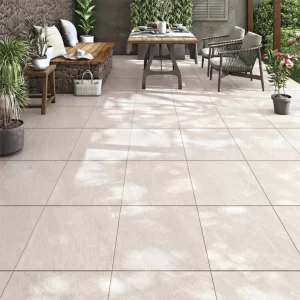
20 mm porcelain tiles are designed for the most demanding conditions, particularly in outdoor environments.
They offer very high resistance to loads and perform exceptionally well in areas exposed to weather. One of their key advantages is installation flexibility, as they can be laid using traditional adhesive methods or dry systems such as sand, gravel, or raised pedestals.
In your catalogue, this thickness is typically represented by outdoor porcelain paving collections, commonly available in formats such as 60×60 or 60×90 cm, with structured anti-slip finishes suitable for exterior use. These tiles are specifically designed for applications where durability and safety are essential.
This makes them ideal for terraces, balconies, gardens, pathways, pool surrounds, driveways, and public outdoor spaces.
Their main benefits include excellent resistance to frost and weathering, high anti-slip performance, and easier maintenance in raised or dry installations. These features make them a preferred choice for projects where durability and safety are essential.
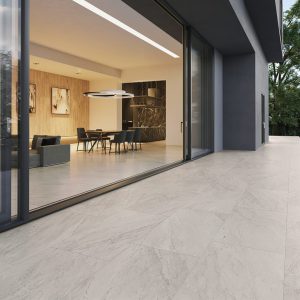
Selecting the correct thickness starts with understanding the specific needs of the project.
Consider the expected load on the surface and whether it will be exposed to impacts or heavy use. Determine if the space is indoors or outdoors, and whether it will be subject to moisture, temperature changes, or weather conditions.
It is also important to assess any constraints related to floor height or weight, particularly in renovation projects. Finally, the installation method should be defined early, as different systems require different technical specifications.
Careful planning at this stage helps avoid costly mistakes and ensures the floor performs reliably over time.
A frequent question is whether a thicker tile is always better. The answer is no. While greater thickness generally increases resistance, it is not always necessary or cost-effective. In many residential interiors, for example, a 20 mm tile would be excessive.
Another common question is whether 6 mm tiles can be used on floors. They can, but only in suitable contexts and with professional installation. The substrate must be perfectly level to ensure proper performance.
Some also ask whether 20 mm tiles can be used indoors. Technically, they can, but this is uncommon. They are typically chosen for outdoor or high-load applications where their properties are most beneficial.
The choice between 6 mm, 9 mm, and 20 mm porcelain tiles should never be based solely on aesthetics or cost. Thickness plays a direct role in functionality, durability, and safety over time.
By carefully analysing the intended use, expected stresses, and installation method, it becomes possible to select the most suitable solution for each project. This not only optimises the investment but also ensures a high-quality, long-lasting result.
In an increasingly specialised market, understanding the differences between porcelain tile thicknesses is not just an advantage. It is a fundamental design skill.
Choosing the right floor is one of the most important decisions in any building or...
Read More...
Kitchen design in 2026 is moving towards warmer, more tactile spaces that feel lived in...
Read More...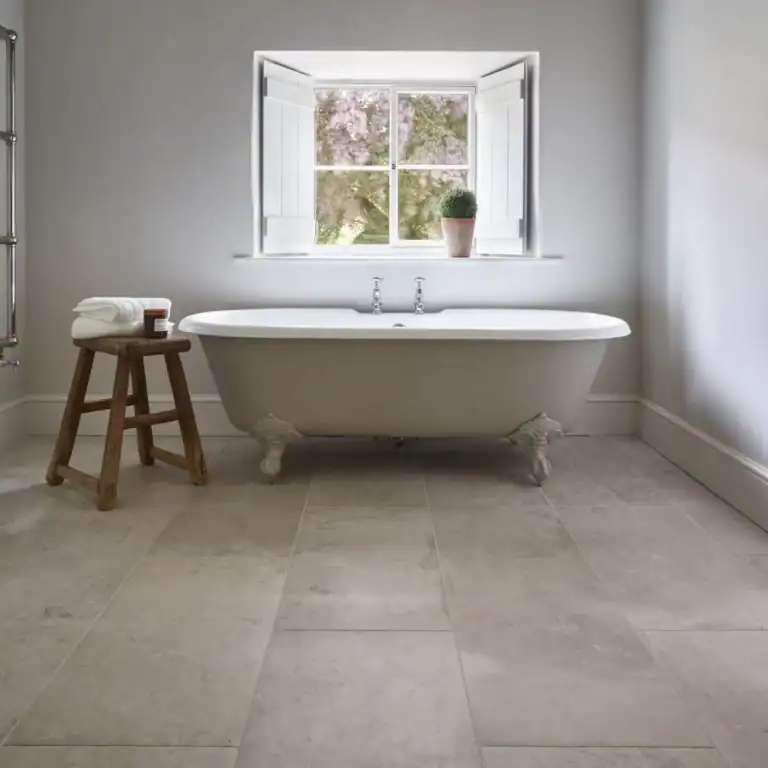
As we move towards 2026, interior design continues its shift towards warmth, authenticity and emotional...
Read More...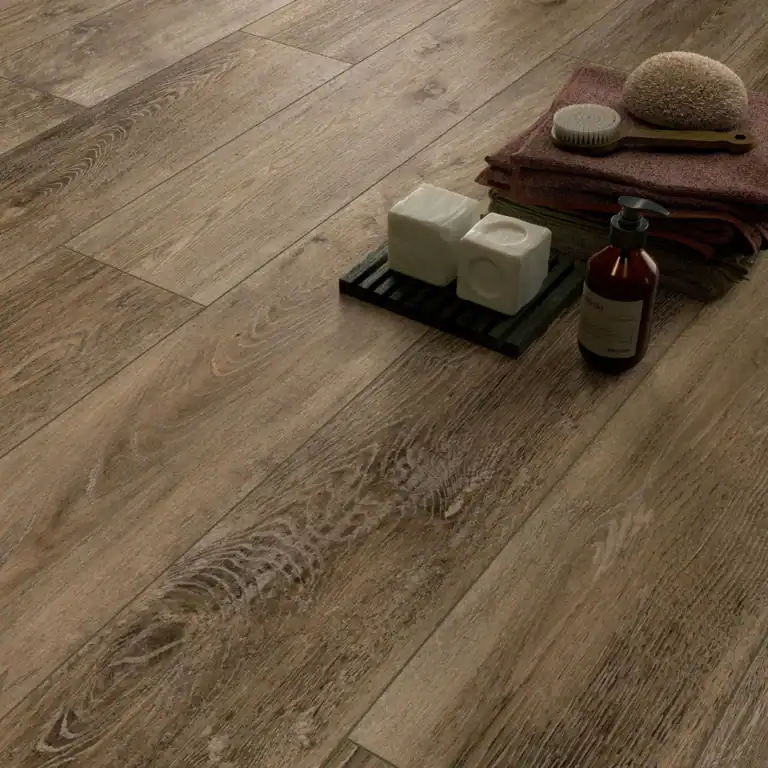
The Canadian Wood collection captures the authentic beauty of natural timber through the durability and...
Read More...